

Rethinking Feminism, Body Image, and Self-Acceptance
5/6/26 | By: Taylor Rapuano

Through compliments and admonishments, through images and words, she discovers the meaning of the words pretty and ugly; she soon knows that to be pleased is to be pretty as a picture; she tries to resemble an image, she disguises herself, she looks at herself in the mirror, she compares herself to princesses and fairies from tales.\
-Simone de Beauvoir, The Second Sex
We are not born judging our bodies. For small children, bodies are the vessels that allow them to play, learn, love, and simply exist in the world. The more time we spend in the world, the more we learn that there is a right way and a wrong way to have a body. This is especially true for women. Starting from a very young age, young girls are inundated with messages communicating that women’s bodies are, almost by definition, to be evaluated and must adhere to a certain standard. That standard is built on centuries of sexist beliefs and expectations of women. After years of absorbing these messages, many women find themselves on a seemingly endless roller coaster ride; one made up of body dissatisfaction, diets, food guilt, beauty procedures, wellness cures, preoccupation with their appearance, and exhaustion from trying to maintain whatever semblance of “acceptable” they can attain. For some, this can develop into an eating disorder, body dysmorphia, or obsessive self-surveillance.
Objectification and Self-Objectification

Treating or evaluating a person based primarily on their appearance—as opposed to who they are as a whole person, or according to the many complex features that make us us— is objectification. When objectification becomes a cultural and societal norm, value-laden so powerful in its pervasiveness that it’s often routine or completely unnoticed, there are consequences for the people objectified the most. In the late 90s, psychologists Barbara Fredrickson and Tomi-Ann Roberts introduced Objectification Theory to describe the primary psychological consequences of this process. The theory basically describes the way we internalize an external observer’s—someone else’s—perceived perspective of our own body. “This perspective on self can lead to habitual body monitoring,” Fredrickson and Roberts explain, “which, in turn, can increase women’s opportunities for shame and anxiety, reduce opportunities for peak motivational states, and diminish awareness of internal body states.”
What does that experience actually look like in our lives?

Moment to moment, in the often innocuous day-to-day, self-objectification looks like a very specific pattern of thinking and being. A cluster of behaviors, interactions, feelings, or even internal dialogues that—depending on your appearance and a host of other factors—could either be so familiar and routine that they’re practically unconscious, or painfully acute and exhausting. A kind of mental merry-go-round you never wanted to get on, and that apparently, you can’t seem to get off.
For most of us, it’s somewhere in-between: prioritizing what you look like to others, essentially as a rule; habitually wondering or worrying what people might be thinking about your appearance, sometimes down to the most minute of details—rather than how you actually feel in your body. It looks like adjusting your standing or sitting posture based on what you think might look best to others, sucking in your stomach, choosing (or changing) your outfit based on how much it hides or shows different parts of your body—not based on what actually feels comfortable or corresponds to the setting or activity at hand. It looks like subtly (or not so subtly)—and often repeatedly—assessing your attractiveness in the mirror during the course of a workout. It’s that feeling, however unwittingly or intensely, that your body is an ornament for other people’s consumption instead of an instrument for your life and its vitality.
The most insidious and emotionally corrosive thing about self-objectification is that it ultimately leads to feeling disconnected from your body’s natural, internal cues—things like hunger and pleasure, regulating emotions, real difficulty being in the present moment, reduced pleasure during sex, and issues concentrating. Much of that is so normalized today in our thinking and cultural landscape that it can seem impossible to arrest or reverse; but we can push back on it. And we should. Enter feminism.
Feminist tools for healing
Bell Hooks, one of our best feminist thinkers and writers, defines feminism for us broadly but usefully: “a movement to end sexism, sexist exploitation, and oppression.” She argues that a foundational goal of feminism is to free women and men—people of all genders—from the rigid gender roles ascribed to them by larger cultural systems.
Understood that way, feminism can offer a basic but powerful framework for understanding the origins and effects of the cultural messages and objectification that surrounds us—as well as real tools to work towards freedom from the pressure to constantly assess and alter your appearance. Here’s four things you can do right now to get off the merry-go-round and move towards some healing and self-love.
Understand, and interrogate, where the beauty standard comes from and who actually benefits.
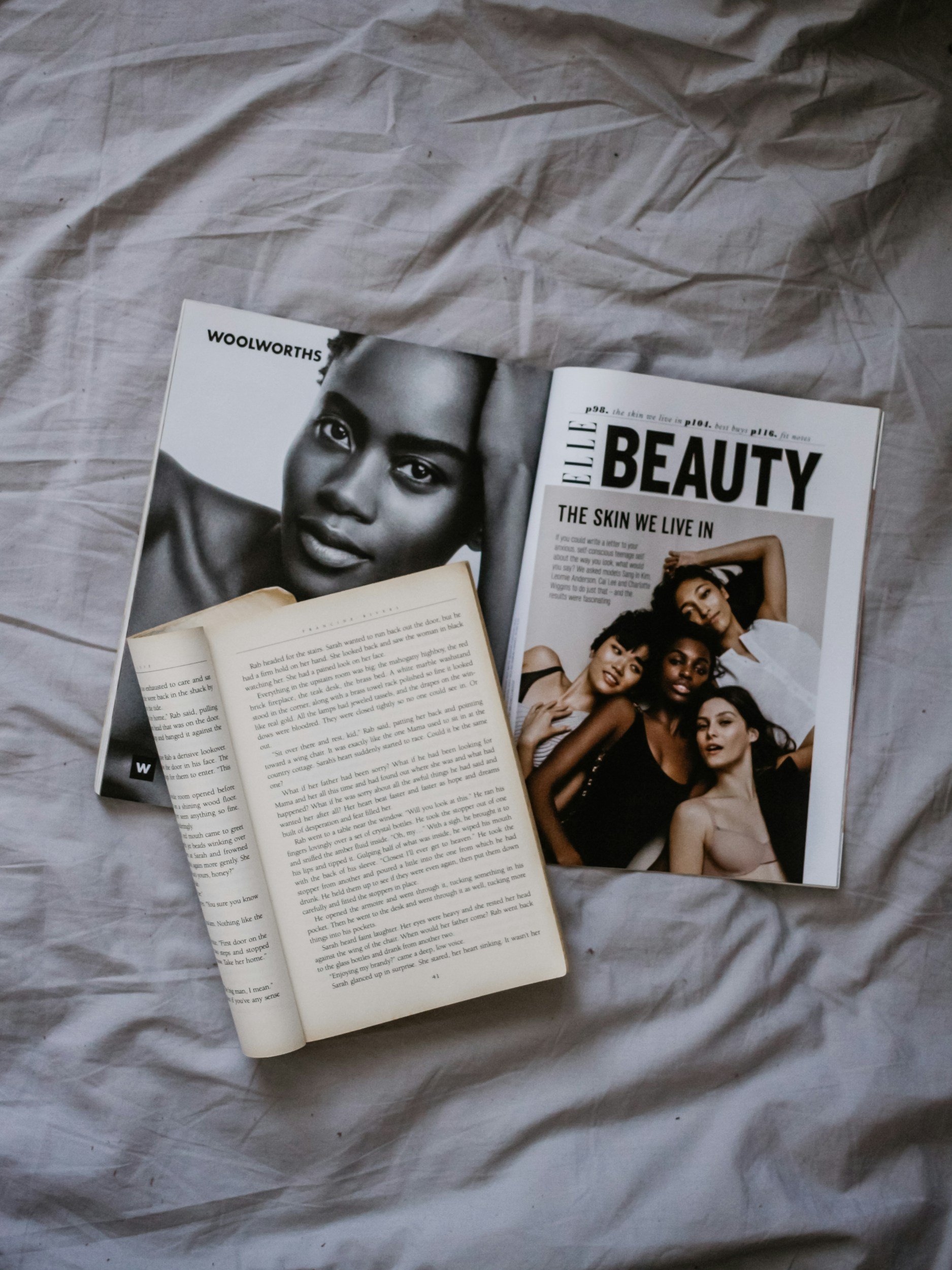
For all its many flavors and decades (centuries?) of intramural debates, Feminist theory essentially encourages asking questions about why things are the way they are in the world and who might benefit from that set of social and institutional arrangements. The beauty standard is built on decades of sexism, entrenched gender norms, and numerous forms of racism, colorism, ableism, ageism, and classism. Is it socially constructed? Yes. And it’s also constantly changing.
As I discussed in a previous blog post, beauty companies profit massively off of the gap—arguably unbridgeable, it’s fair to say—between what someone looks like right now and what someone feels like they need to change. The narrower or more artificial the standard, the bigger the gap, the larger the profits in remedy products and brands. There is a lot of money—half-a-trillion dollars globally, by some measures—to be made in getting (especially) women to obsess about their appearance and find more and more things to fix. This way of relating to ourselves doesn’t come from nowhere, and basic economics and deep incentives have major roles to play.
The more we can recognize where the pressure to self-objectify often comes from, the less we have to sit in a space of shame and self-blame for having these instincts in the first place. From there, we can start unlearning lessons we’ve been taught about appearance and what is expected of us to maintain it.
Use your learning to challenge internal criticisms.
When you notice critical thoughts about your body, as well as ways to fix or change it, take just a moment. Check in with yourself and ask: where is this judgement coming from? When or why did I start to feel this way? Who’s benefitting from this cycle I’m in? The thoughts may not suddenly dissipate, but this process can help chip away at some of the power they hold over us—and little by little interrupt that cycle with a dose of facts and self-compassion.
Learn about body neutrality.
Body neutrality offers a powerful framework to challenge the idea that our appearance has to hold significant value, and that we must love how we look now or all the time. The body is important in the sense that it allows a person to live their life, but it’s not more important than who they are and the life they get to live. That is body neutrality: viewing your body as the vessel that carries you through life. In practice, it also looks like respecting it and caring for it even when you don’t like the way it looks.
For women in particular, body neutrality is a really powerful challenge to a culture that demands they put in the necessary time, effort, and money to perfect or maintain it.
Embodiment
Self-objectification involves constantly viewing one’s own body from the perspective of an external observer. Embodiment is the opposite. It’s being present in your body. It’s prioritizing the experience of experiencing and engaging our body over how other people might be experiencing or engaging with our body. In essence, embodiment enables a mind-body connection we can come back to time and again throughout the day—and it’s crucial for listening to and caring for one’s body. It allows you to connect to your body’s physical needs, pleasure, and subjective emotional experience.
To cultivate embodiment, you can ask yourself how it feels to be in your body, or what your body needs right now, instead of asking what it looks to others, or against the culturally sanctioned ideal. Tune into your body’s physical sensations and notice what it feels like to walk down the street, what the wind feels like on your face. Notice how your clothes feel on your body. Are they comfortable? Notice what foods you like, what foods you don’t like. Notice what brings you pleasure. Engage in movement that feels good and notice it.
For many, this is a whole new way—maybe even surreal, or scary at first—of relating to the body and it can feel unnatural. With time and practice, you strengthen your connection with your body and internal experience.
A Note on Men and Boys

The experiences and phenomena I’ve sketched focus on objectification and women, but men and boys are held to their own body standard and are by no means exempt from objectification, self-objectification, and destructive body image struggles. Many men intensely struggle with self-objectification and body image. In fact, men and boys make up a third of people with eating disorders; that’s a lot. The good news is that feminism can serve men struggling with food/body struggles by addressing the gender norms that likewise stigmatize their own suffering in this area—and also make it harder and harder for men to get help. If you are a man struggling with any of these issues, you deserve help and support.
Don’t struggle alone. Reach out for help.
If you’re considering professional support, we’re here to help. Please reach out to schedule a free, no-commitment consultation. There’s no fee or obligation—just click the button below to get started.